
Responsible Gaming: Play Safe and Stay in Control
Games like color prediction can be fun, but they carry real financial risk and there is no guaranteed win. This guide helps you play safely: set limits, spot warning signs, use control tools, and find help if you need it.
Why responsible gaming matters
Color prediction is fast, easy, and designed to keep you playing. That is exactly why limits matter. The healthiest mindset is simple: this is entertainment you pay for, like a movie ticket — not a way to make money. If you keep that in mind, you stay in control. If you forget it, small losses can quietly grow.
Understanding the odds honestly
Responsible gaming starts with honest maths. In a color prediction game, payouts are set so the platform keeps a small edge on average. That is why, across many rounds, the odds gently favour the house — not because any single round is unfair, but because the long-run average is designed that way. This is true of every chance-based game, and no amount of skill, timing, or “strategy” changes it. Accepting this simple fact is freeing: once you know the game is not a way to earn, you can enjoy it purely as entertainment and never feel the pull to chase a profit that is not really there.
Simple rules to play safe
- Only play if you are 18 or older.
- Use only spare money you can afford to lose.
- Set a budget and a time limit before you start.
- Never chase losses or increase stakes to “win it back”.
- Never borrow money to play.
- Take regular breaks, and stop when it stops being fun.
Setting limits that work
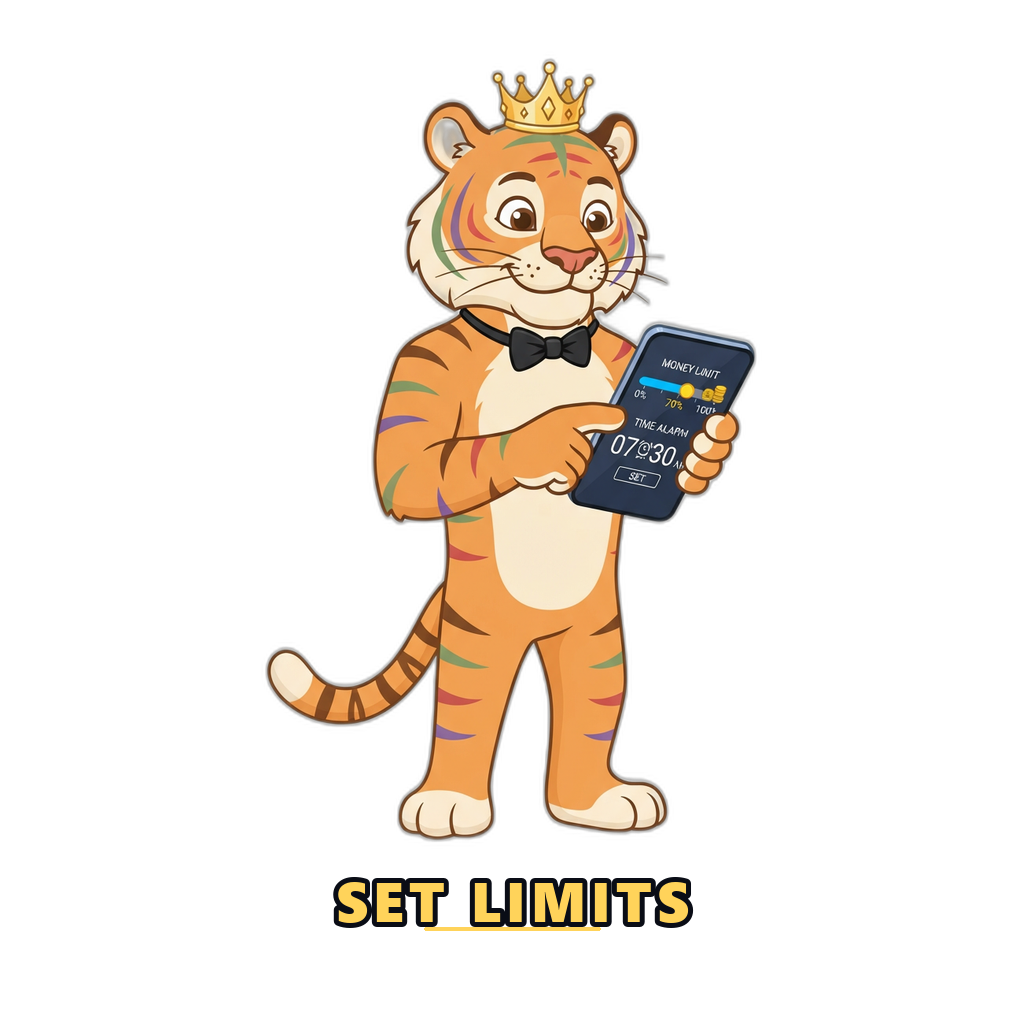
| Limit type | How to set it | Why it helps |
|---|---|---|
| Money limit | A fixed rupee amount per session | Caps your total risk |
| Time limit | Set an alarm before you start | Prevents long sessions |
| Loss limit | Stop after losing a set amount | Avoids chasing |
| Deposit limit | Use platform deposit caps | Controls funding |
| Cool-off | Take a day or week off | Resets your habits |
How losses can build up
Because color prediction rounds are fast and stakes feel small, losses can grow quietly. A ₹20 stake every minute may not feel like much in the moment, but over an hour of continuous play that is a great deal of money at risk. The danger is not one big bet — it is many small ones, plus the temptation to top up “just once more” after a loss. Seeing this clearly is half the battle. When you notice a session stretching longer than planned, that is exactly the moment to stop, not to double down.
Warning signs to watch for
| Sign | What it can lead to |
|---|---|
| Chasing losses | Bigger losses and stress |
| Spending more than planned | Money problems |
| Borrowing to play | Debt |
| Hiding play from family | Isolation and guilt |
| Feeling unable to stop | A sign to seek help now |
A quick self-check
If you are unsure whether your play is still healthy, ask yourself the questions below honestly. There is no score to calculate — even one “yes” is a good reason to take a break and, if needed, reach out for support.
- Do I play for longer or spend more than I planned?
- Have I tried to win back money I lost?
- Have I used money meant for bills, food, or savings?
- Do I hide how much I play from my family?
- Do I feel anxious, irritable, or low when I try to stop?
Answering yes to any of these does not mean anything is wrong with you — these games are designed to be compelling. It simply means it is time to step back and use the tools below.
Building healthy gaming habits
Responsible gaming is easier when it is built into simple habits rather than relying on willpower in the moment. The most reliable habit is to decide everything in advance: how much, how long, and what will make you stop. Because the decisions are made before you start — when you are calm — they are far easier to keep when a round is not going your way. Writing your limits down, or setting a phone alarm for your stop time, turns a good intention into an actual boundary.
It also helps to keep gaming in proportion to the rest of your life. If it is competing with time for family, work, sleep, or other hobbies, that is a sign to scale back. Many people find it useful to treat a session like a small treat rather than a routine — something occasional and budgeted, not a daily habit. And whenever a session stops being fun, that feeling is itself a good enough reason to stop for the day.
Myths that lead to harm
Some beliefs are especially dangerous because they encourage people to keep spending. Recognising them makes them easier to resist.
| Myth | Reality |
|---|---|
| 'I'm due for a win after losses' | Odds never change; losses do not build toward a win |
| 'I can win it back' | Chasing losses usually deepens them |
| 'A system or formula beats it' | No system beats a random game |
| 'I only lose because I stop early' | Playing longer increases expected losses |
| 'Winnings are reliable income' | The long-run edge favours the platform |
Tools that help
- Deposit and loss limits — cap how much you can add or lose.
- Session reminders — alerts that tell you how long you have played.
- Self-exclusion — block your own access for a set period.
- The free demo — practice with play-money instead of real money.
How self-exclusion works
Self-exclusion is a tool that lets you block your own access to a platform for a set period — a week, a month, or longer. It exists precisely for the moments when willpower alone is not enough, and using it is a sign of strength, not weakness. When you self-exclude, you remove the option to play during a vulnerable time, which gives you space to reset. Where a platform offers cooling-off or self-exclusion settings, do not hesitate to use them. You can also reduce temptation by turning off gaming notifications, removing saved payment methods, and asking a trusted person to help you stay accountable during the break.
Talking to family and friends
One of the most effective steps is also the simplest: talk to someone you trust. Gaming problems grow in secrecy, and they shrink when they are shared. You do not need a formal script — telling a family member or close friend that you want to cut back, and asking them to check in with you, can make a real difference. If you are worried about someone else, approach them gently and without judgement, focus on your concern for them rather than the money, and point them toward the tools and help on this page.

Where to get help
If gaming is affecting your money, mood, sleep, or relationships, please reach out. Talk to someone you trust, speak with a doctor, or contact a mental-health or gambling support service. In India, national mental-health helplines can point you to local support. Asking for help is a strong, sensible step — and support does work. You can also contact us and we will point you toward resources.
Frequently Asked Questions
What is responsible gaming?
Responsible gaming means treating games like color prediction as paid entertainment, not income — playing only with money you can afford to lose, setting clear limits, and stopping when you reach them. It also means recognising when play is no longer healthy and asking for help.
Can I win guaranteed money with a strategy?
No. Color prediction and lottery-style games are based on chance. No strategy, formula, or app can guarantee a win. Over time these games are designed to favour the platform, so treat any win as luck.
How do I set a gaming budget?
Decide a fixed amount of spare money and a time limit before you start. Never use money meant for bills, rent, food, or savings. When either limit is reached, stop — win or lose.
What are signs of a gaming problem?
Warning signs include chasing losses, spending more than planned, borrowing to play, hiding play from family, and feeling anxious or unable to stop. If these sound familiar, take a break and seek support.
Where can I get help in India?
You can talk to a trusted family member or doctor, and reach out to support services such as national mental-health helplines. If gaming is harming your finances or wellbeing, professional help is available and effective.