
Wingo Color Prediction: Red, Green and Violet Explained
Wingo color prediction asks you to guess the color of a short round’s result — red, green, or violet. This guide explains the colors, the real odds behind them, the “colour trading” myth, and how to practice safely with a free demo.
What is Wingo color prediction?
Wingo color prediction is the color-based version of Wingo prediction. Instead of only guessing a number, you predict a color. Behind the scenes, a random number from 0 to 9 is drawn each round and mapped to a color. Your job is to guess which color will appear. It is simple, visual, and fast — perfect for mobile play — but still entirely based on chance.
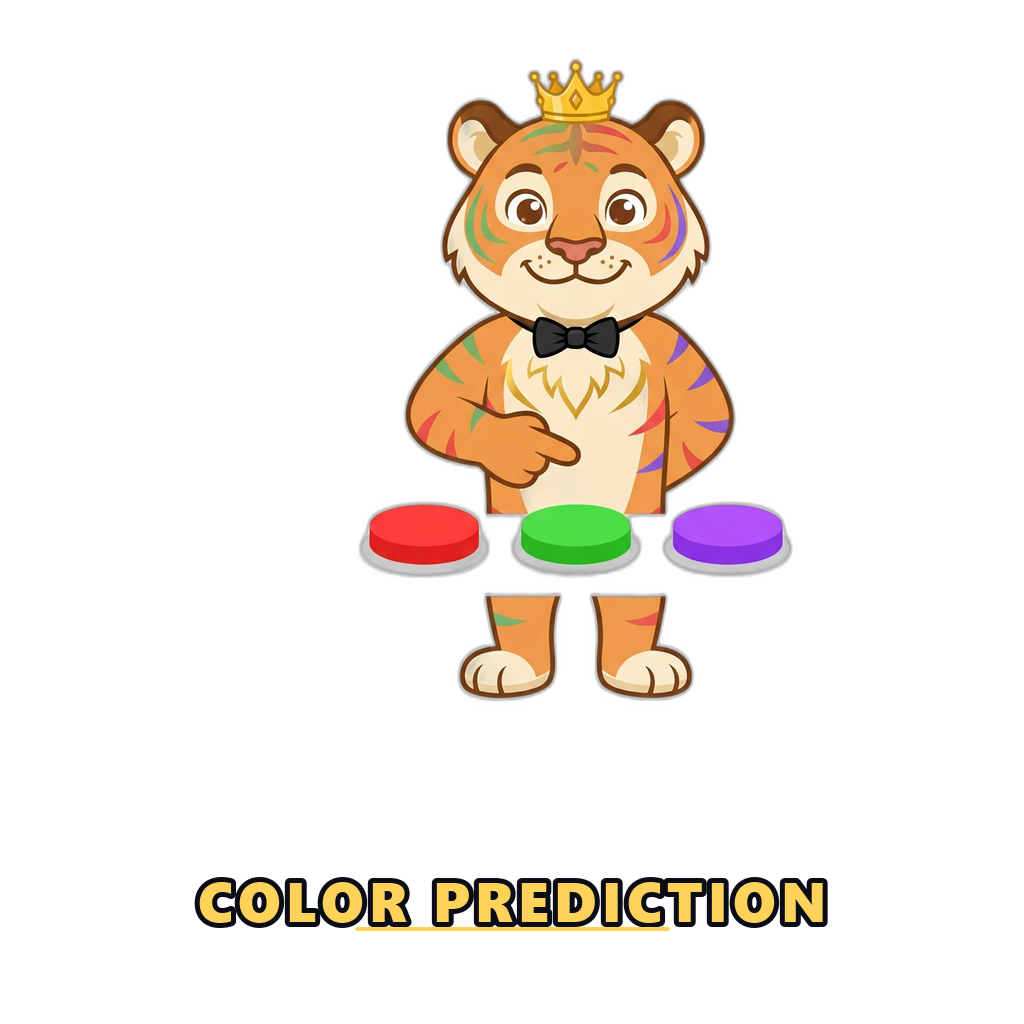
The colors and what they mean
Each number maps to a color. The exact mapping can vary slightly, but a common set of rules looks like this:
| Number | Color(s) | Notes |
|---|---|---|
| 0 | Red + Violet | Special mixed result |
| 1, 3, 7, 9 | Green | Odd numbers |
| 2, 4, 6, 8 | Red | Even numbers |
| 5 | Green + Violet | Special mixed result |
Odds and payouts
Because red and green each cover several numbers, they appear more often and pay less. Violet covers only the special results, so it appears rarely and pays more. The exact-number bet is hardest of all and pays the most. This is the core trade-off of the game.
| Prediction | Rough frequency | Typical payout |
|---|---|---|
| Green | Often | About 2× |
| Red | Often | About 2× |
| Violet | Rare | About 4.5× |
| Exact number | Rarest | About 9× |
Expected value in plain words
“Expected value” sounds technical, but the idea is simple and worth knowing. It is just the average result you would get if you played the same bet many, many times. In a color prediction game, the payouts are set so that this average is slightly negative for the player — that is the platform’s small edge. A green bet that wins a little under half the time and pays about 2× ends up, on average, returning a bit less than you stake over the long run. Violet and exact-number bets swing harder: they lose more often but pay more when they land, so the ride is bumpier even though the long-run maths is similar.
Why does this matter for choosing a colour? Because no colour has a “better” expected value that you can exploit — the trade-off between frequency and payout keeps them broadly balanced. What differs is variance: how wild the ups and downs feel. If you want steadier, smaller swings, green and red suit you. If you accept rarer but bigger moments, violet does. Neither choice beats the game; it only changes the texture of the session.
| Colour | Wins roughly | Payout | Session feel |
|---|---|---|---|
| Green | Just under half the rounds | ~2× | Steady, low variance |
| Red | Just under half the rounds | ~2× | Steady, low variance |
| Violet | A small share of rounds | ~4.5× | Bumpy, higher variance |
‘Colour trading’ explained
You may see color prediction called “colour trading”, including terms like “Jai Club colour trading”. This is just a nickname. It is not real trading, it is not linked to the stock market, and it is not an investment. It is a chance-based game with the same risks as any other. Do not let the word “trading” make it sound like a safe way to grow money — it is not.
Managing risk with colours
You cannot change the odds, but you can absolutely manage your risk. The colour you pick sets how bumpy the session feels, and your stake sets how much each bump costs. A simple, sensible approach for beginners is to stick mostly to green or red at the smallest stake, which keeps swings gentle while you learn. Save violet or exact-number bets for the rare moments you have decided in advance to spend a little on a longer-shot, and never as a way to “win back” a loss.
- Decide colours before you start, not emotionally mid-session.
- Keep stakes flat. Do not raise them after a loss.
- Cap your violet/number bets to a small slice of your budget.
- Track time, not just money — set an alarm.
Common myths
- “Violet is due.” No color is ever due; rounds are independent.
- “A pattern predicts the next color.” Past results do not affect the future.
- “A hack app can win.” These are scams or malware. Avoid them.
- “Bigger stakes recover losses.” Chasing losses usually makes them worse.

A beginner’s colour plan
If you are just starting, a simple colour plan keeps your first sessions calm and cheap. The idea is not to “win” — no plan can do that — but to control how the session feels while you learn. The template below works well in the free demo and translates directly to real play if you ever choose it.
| Choice | Beginner setting | Reason |
|---|---|---|
| Main colour | Green or red | Lower variance, wins more often |
| Violet bets | Rarely, tiny stake | Keeps big swings occasional |
| Number bets | Skip at first | Hardest to hit; save for later |
| Stake | Smallest option | Stretches practice, caps risk |
| Session length | Short, with an alarm | Prevents drifting on |
Once this feels natural, you will understand the colours far better than any “prediction” video could teach — and you can explore the fast 1 minute format with the same discipline.
Color prediction and Indian players
Color prediction has a large following in India because it is quick, visual, and works well on a budget phone with UPI payments. That accessibility is a strength, but it also means the game deserves respect. Regional rules around real-money games can vary across Indian states, so it is your responsibility to understand what applies where you live and to only play if you are eighteen or older. If you ever choose to add money, stick to official apps and familiar methods like UPI, Paytm, PhonePe, and Google Pay, and never send money to a stranger promising “guaranteed” colour predictions.
The healthiest way to enjoy color prediction is to treat it like any other paid entertainment: a small, fixed amount set aside for fun, with clear time limits, and no expectation of profit. Our responsible gaming guide has simple tools that make this easy to stick to.
Practice free
Want to see red, green, and violet in action without risk? Try the free color prediction demo — it uses play-money only. If you are new, start with the how to play Wingo guide first, then explore the fast 1 minute format.
Frequently Asked Questions
What is Wingo color prediction?
It is a game where you predict the color of a short round's result — usually red, green, or violet. Each result is a random number from 0 to 9 that maps to a color. Matching the color pays a payout based on how often that color appears.
What do red, green, and violet mean in Wingo?
In common rules, most odd numbers are green and most even numbers are red, while 0 and 5 also include violet. Violet appears less often, so it pays more. The exact mapping can vary slightly between platforms.
Is colour trading the same as color prediction?
'Colour trading' is just another name people use for color prediction. It is not real financial trading and has nothing to do with the stock market. Treat it as a chance-based game, not an investment.
Which color is best to predict?
There is no 'best' color. Red and green win more often but pay less; violet pays more but appears rarely. No color is ever due, because each round is independent. Choose based on how much variance you are comfortable with, and always within a budget.
Can I try color prediction without money?
Yes. Use the free play-money demo on this site to practice red, green, and violet predictions with zero risk.
Try the free Jai Club demo
Practice Wingo color prediction with play-money — no deposit, no risk.
Demo uses play-money only. 18+. Play responsibly.